What this ADHD test measures
The ASRS was developed by the World Health Organization with researchers at Harvard as part of the World Mental Health Survey. The full version has 18 questions mapped to the ADHD criteria. Part A, which you just answered, contains the six questions that best separated adults with ADHD from adults without it.
The first three questions are about executive function: finishing tasks, organising, remembering obligations. The last three are about procrastination and inner restlessness, which is how hyperactivity usually looks once a child with ADHD becomes an adult.
How the score is calculated
The threshold is not the same for every question:
- Questions 1–3 count if you answered Sometimes or more often.
- Questions 4–6 count only if you answered Often or Very often.
Four or more answers above these thresholds mean your symptoms are highly consistent with adult ADHD and further assessment is warranted. The thresholds differ because the questions differ in how well they discriminate: forgetting appointments even sometimes is more telling than fidgeting sometimes, which almost everyone does.
What a positive or negative result means
In the original validation study the six-question version reached a specificity of 99.5% and a sensitivity of 68.7%, with 97.9% overall classification accuracy. In practice:
- A positive result is rarely a false alarm. It is worth taking seriously.
- A negative result does not rule ADHD out. Roughly three in ten adults with ADHD score below the threshold, more often women and people with mainly inattentive symptoms.
The test is not a diagnosis. Diagnosing ADHD needs a clinical interview based on DSM-5 criteria, evidence that symptoms were present in childhood, impairment in more than one area of life, and ruling out other explanations. No questionnaire does that.
What else can look like ADHD
Several conditions produce almost the same picture, which is why a positive screen is the start of an assessment, not the end:
- Chronic short or broken sleep, the most common trap
- Anxiety and depression, which both impair concentration and working memory
- Thyroid problems, iron deficiency or low vitamin B12
- Burnout and long-term work stress
- Alcohol, cannabis or other substances
The main way to tell them apart is timing: ADHD is present from childhood and stays fairly stable over the years, while depression and burnout have a beginning and come in episodes.
What happens next
The next step is not another test but a clinical assessment by a doctor: a structured interview, a childhood history (often with the DIVA-5 interview), and screening for other conditions. With me, an adult ADHD assessment takes on average two 45-minute sessions (€130 each), online in English or Greek, or in person in Trikala, Greece. It is individual, so occasionally more sessions are needed, and you are always told in advance. It ends with a written report.
If you live outside Greece, read ADHD assessment and treatment in Greece, in English, including what is and is not possible with prescriptions across borders.
Book an assessment
Frequently asked questions
Is this ADHD test free?
Yes. There is no sign-up, email or payment. Your score is calculated in your browser and your answers are not sent or stored anywhere.
How accurate is the ASRS screener?
In the original validation study the six-question ASRS had a specificity of 99.5% and a sensitivity of 68.7%. A positive result is rarely a false alarm, but a negative result does not rule ADHD out: roughly three in ten adults with ADHD score below the threshold.
Does a positive result mean I have ADHD?
No. The ASRS is a screening tool, not a diagnosis. Diagnosing ADHD requires a clinical interview, evidence that symptoms were present in childhood, impairment in more than one area of life, and ruling out other causes such as anxiety, depression or sleep problems.
Can I use this test for my child?
No. The ASRS was developed and validated for adults aged 18 and over. Children and adolescents are assessed with different tools.
Can I show the result to my doctor?
Yes, as a starting point for the conversation. After the test you can print or save a summary of your answers as a PDF. No health system accepts a self-report questionnaire as a diagnosis.
Is there a Greek version?
Yes. The same screener is available in Greek, with the same scoring, on the Greek ADHD test page.
Sources
- Kessler RC, Adler L, Ames M, et al. The World Health Organization Adult ADHD Self-Report Scale (ASRS): a short screening scale for use in the general population. Psychological Medicine 2005;35(2):245-256. doi:10.1017/S0033291704002892
- Ustun B, Adler LA, Rudin C, et al. The World Health Organization Adult Attention-Deficit/Hyperactivity Disorder Self-Report Screening Scale for DSM-5. JAMA Psychiatry 2017;74(5):520-527. doi:10.1001/jamapsychiatry.2017.0298
- Kooij JJS, Bijlenga D, Salerno L, et al. Updated European Consensus Statement on diagnosis and treatment of adult ADHD. European Psychiatry 2019;56:14-34. doi:10.1016/j.eurpsy.2018.11.001
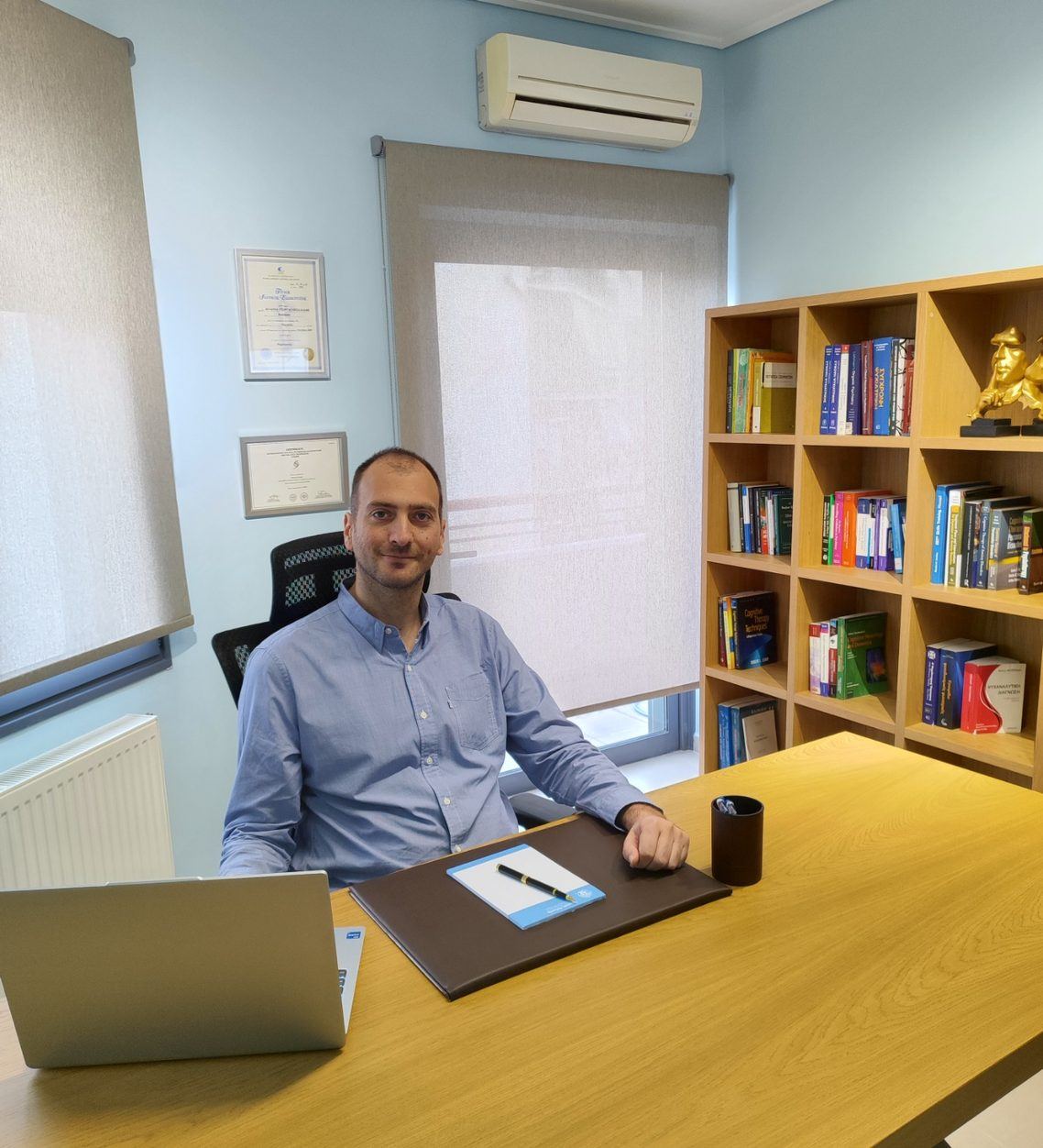
Last updated: 1 October 2026 · Written and reviewed by Dr. Georgios Mylonas, Psychiatrist – Psychotherapist (Greek licence 054/29.01.2024).
 Medical review: Dr. Georgios Mylonas, Psychiatrist – PsychotherapistUpdated: 1 October 2026